Home / Helicopter types
The helicopters that fly charter in the UK: passengers, engines, size and weight, and what they mean for a private landing site.
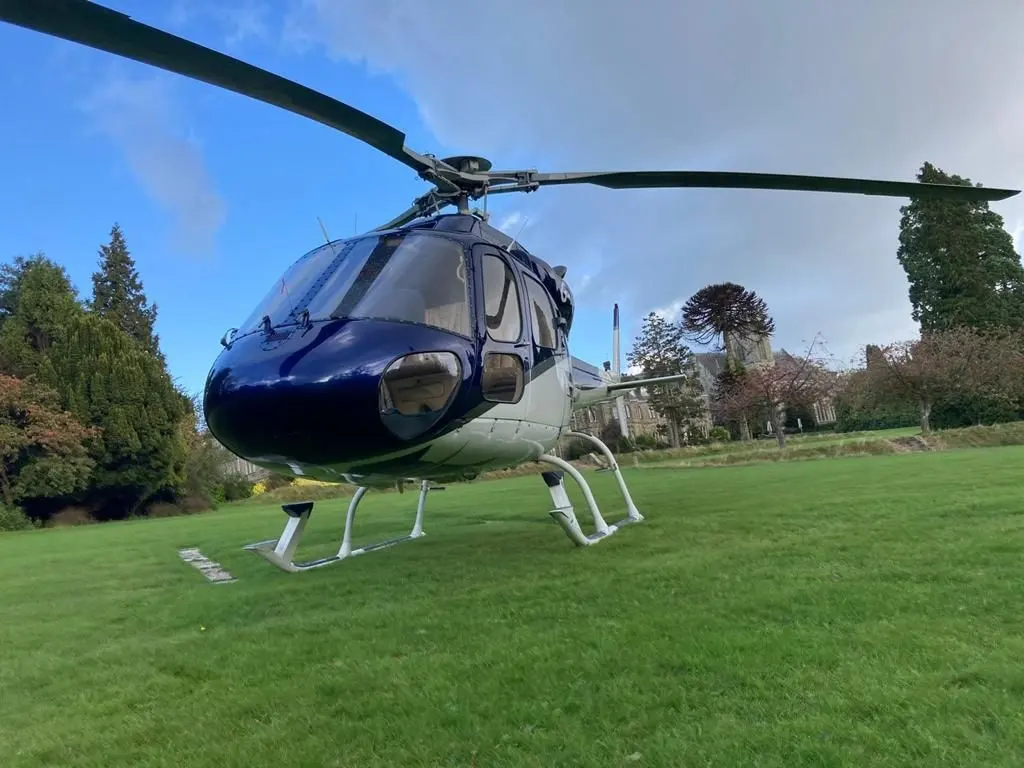
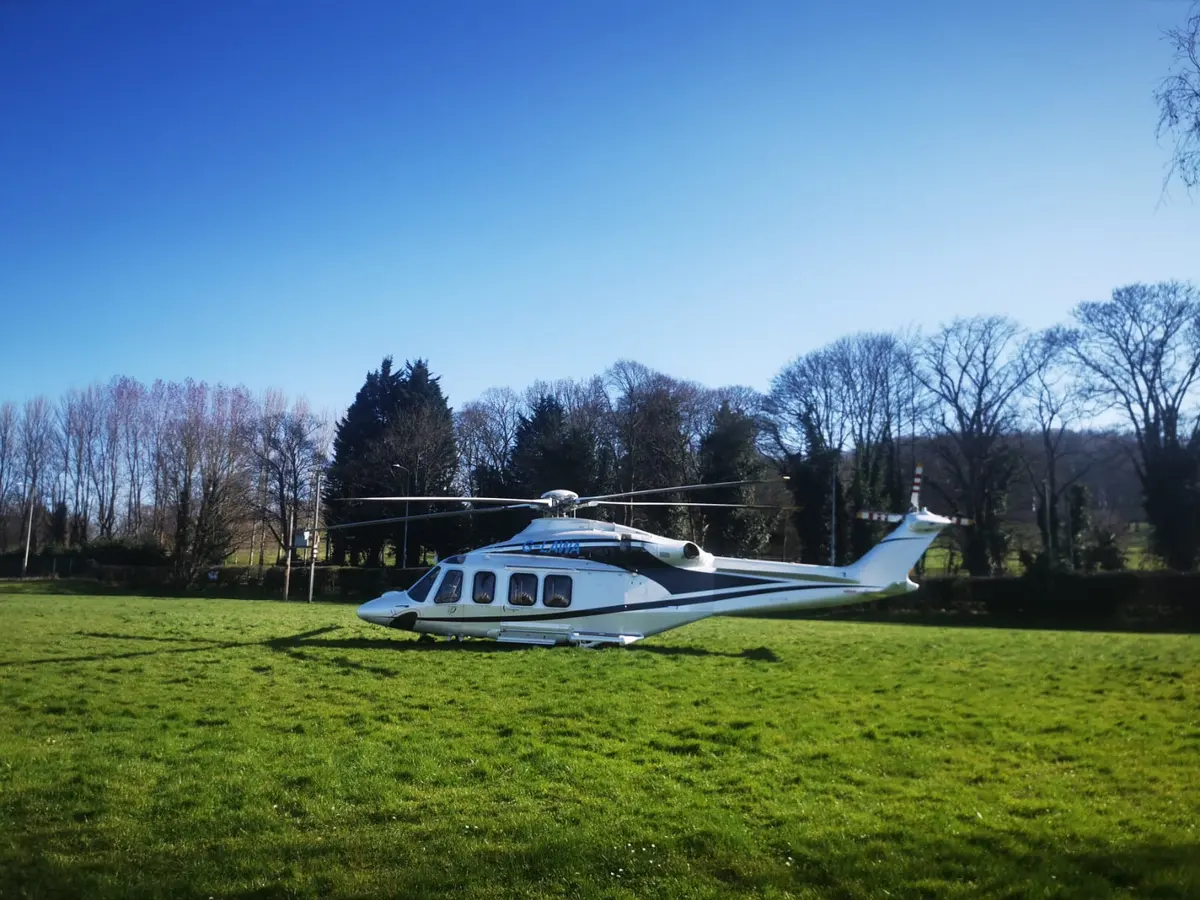
If you own or manage a site, the figures that matter most are the overall size with the rotors turning (it sets the area needed), the maximum take-off weight (it sets the surface loading) and whether the helicopter is single or twin-engine (it affects where it may operate). Each page gives them with the source, and says where we could not confirm one. No operator names, registrations or prices appear on these pages.
| Type | Engines | Passengers (max) | Main rotor | Max take-off weight |
|---|---|---|---|---|
| Airbus AS355 Twin Squirrel | twin | 5 (all AS 355 models) | 10.69 m (AS 355 (all models, 3 blades)) | 2600 kg (AS 355 N / NP (F2 is 2,540 kg; F1 2,400 kg)) |
| Airbus H125 (AS350 B3) | single | 6 (H125) | 10.69 m (AS 350 B3) | 2250 kg (AS 350 B3 (2,370 kg with modification OP-3369 weight extension)) |
| Airbus H130 (EC130 T2) | single | 7 (H130 / EC130 T2) | 10.69 m (EC 130 T2) | 2500 kg (EC 130 T2) |
| Airbus H135 (EC135) | twin | 7 (EC135 family) | 10.2 m (EC135 (Issue 21 sheet, latest section)) | 2910 kg (EC135 T2+/P3/T3 family (2,950 kg permitted under RFMS 9.1-5/6/7; Airbus H135 page quotes 2,980 kg, 3,100 kg alternate - differs from TCDS)) |
| Airbus H145 | twin | 9 (BK117 D-3 (H145)) | 10.8 m (BK117 D-3 (H145)) | 3800 kg (BK117 D-3 (D-2: 3,650 kg standard, 3,700/3,800 kg by RFM/major change)) |
| Leonardo AW109 (A109) | twin | 7 (A109S / A109N / A109E) | 10.83 m (A109S / A109N / GrandNew) | 3175 kg (A109S / A109N / AW109SP (A109E is 2,850 kg; Leonardo page: MGW 3,175 kg internal, 3,200 kg external)) |
| Leonardo AW119 | single | 7 (A119) | 10.83 m (A119) | 2720 kg (A119 (section 7; A119 MkII / Kx section not read for MTOW)) |
| Leonardo AW169 | twin | 11 (AW169) | 12.12 m (AW169) | 4600 kg (AW169 wheeled (4,800 kg with kit)) |
| Leonardo AW139 | twin | 15 (AW139) | 13.8 m (AW139) | 6400 kg (AW139 standard (6,800 / 7,000 kg with kits)) |
| Bell 407 | single | 6 (407GXi) | 10.66 m (407) | 2268 kg (407 / 407GXi standard (2,381 kg optional, 2,722 kg external load per Bell page)) |
| Sikorsky S-76 | twin | 12 (S-76C / S-76D) | 13.41 m (S-76A/B/C) | 5386 kg (S-76D (S-76C 5,307 kg; S-76A 4,763 kg)) |
| Robinson R44 | single | 3 (R44 II) | 10.06 m (R44 / R44 II) | 1134 kg (R44 II (Raven I: 1,089 kg)) |
| Robinson R66 | single | 4 (R66) | 10.06 m (R66) | 1225 kg (R66) |
Maximum passenger figures are manufacturer or EASA limits; charter cabins carry fewer. Variants differ.
Browse the heliports, airfields, airports and venues in this guide, or read the landing rules and the night landings guide. Each type page lists airfields whose open-data runway is at least big enough for its rotor.
A range of light single-engine and medium twin-engine types. This guide covers 13: AS355, H125, H130, H135, H145, AW109, AW119, AW169, AW139, Bell 407, S-76, R44 and R66. We could source UK charter use for only some of them, so the others are marked verify on their pages.
Smaller helicopters need less room, but the site, the surface, the obstacles and the operator’s own rules matter as much as size. UK guidance sizes the landing area by the largest dimension of the helicopter with its rotors turning.
From EASA type-certificate data sheets and manufacturers’ own pages. Each figure on a type page is tagged as verified on the cited document or marked verify.
We found no official figure for grass strength. The pilot checks the surface on arrival and the operator decides. See the landing surfaces guide.
Where a line is tagged Verify we could not read the primary text, or the source does not state it. Treat it as unconfirmed until you have checked.