Home / Helicopter types / Airbus H135 (EC135)
Passengers, engines, size and weight of the Airbus H135 (EC135), and what they mean for a private landing site.
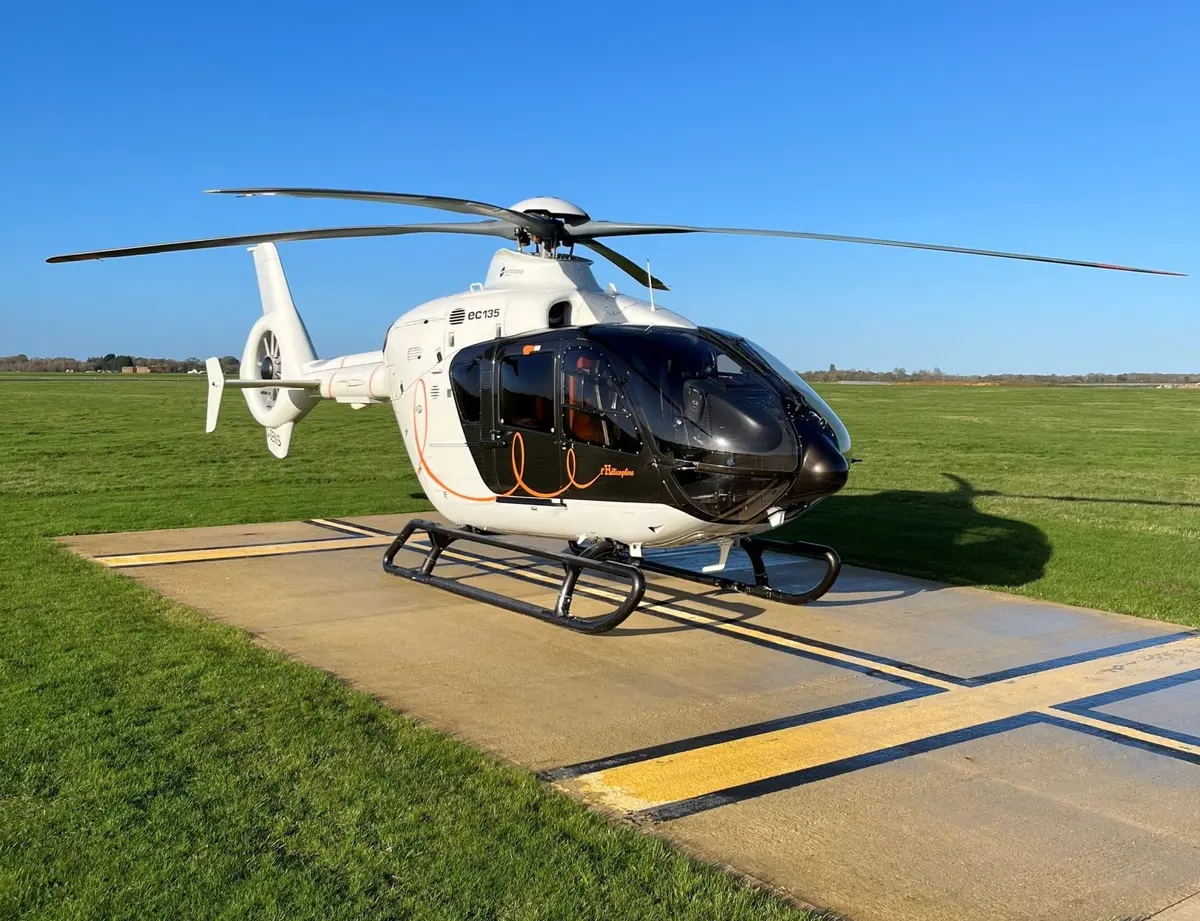
Airbus H135 (EC135) is made by Airbus Helicopters (Airbus Helicopters Deutschland GmbH holds the EASA TC). Whether it is used on UK charter flights: Verify. The figures below are the manufacturer’s or the European Union Aviation Safety Agency’s (EASA) type-certificate data; each is tagged verified on the cited document or Verify.
| Item | Figure |
|---|---|
| Engines | 2 x turboshaft (Pratt & Whitney Canada PW206B2/B3 or Safran Arrius 2B2 Plus depending on model) (EC135 T2+/P3/T3 etc.) |
| Passengers (maximum, not a typical charter layout) | 7 (EC135 family) |
| Typical cruise speed | not confirmed Verify |
| Range | 338 nm (H135) |
| Main rotor diameter | 10.2 m (EC135 (Issue 21 sheet, latest section)) |
| Overall length, rotors turning | not confirmed Verify |
| Overall height | 3.35 m (EC135) |
| Maximum take-off weight | 2910 kg (EC135 T2+/P3/T3 family (2,950 kg permitted under RFMS 9.1-5/6/7; Airbus H135 page quotes 2,980 kg, 3,100 kg alternate - differs from TCDS)) |
Figures vary by variant and weight option. Passenger numbers are a manufacturer or EASA maximum; VIP layouts carry fewer. Overall length with the rotors turning is the figure used to size a landing area and was found only for some types.
Single or twin. This is twin-engine. UK guidance says helicopters must use Performance Class 1 to operate in congested areas, and that single-engine helicopters under Part CAT cannot use congested-area sites (CAP 3043, 3.3). Read in the source
These airfields state a helicopter or visitor policy on their own websites and, in open data (OurAirports), have a runway at least 16 m long and wide (1.5 times the rotor diameter, which is the lowest the area could be). This is size only. It does not mean the airfield accepts this type: contact it first.
See also all heliports, airfields and venues. Heliport sizes are not in open data.
The maximum figure we could verify is 7 (seats (1 cockpit + 6 cabin; 7 cabin with kit per TCDS). Airbus page: one or two pilots plus up to six passengers). A charter cabin usually has fewer seats.
It depends on the helicopter’s overall size with the rotors turning (the main rotor alone is 10.2 m across), the surface, the obstacles and the operator’s own rules. UK guidance for pleasure-flying and feeder sites asks for a landing and take-off area at least 1.5D wide. The pilot in command decides on the day.
It is twin-engine (2 x turboshaft (Pratt & Whitney Canada PW206B2/B3 or Safran Arrius 2B2 Plus depending on model)).
Maximum take-off weight is 2,910 kg (EC135 T2+/P3/T3 family (2,950 kg permitted under RFMS 9.1-5/6/7; Airbus H135 page quotes 2,980 kg, 3,100 kg alternate - differs from TCDS)), per EASA TCDS EASA.R.009 Issue 21 III.12.
Where a line is tagged Verify we could not read the primary text, or the source does not state it. Treat it as unconfirmed until you have checked.